EN
EN
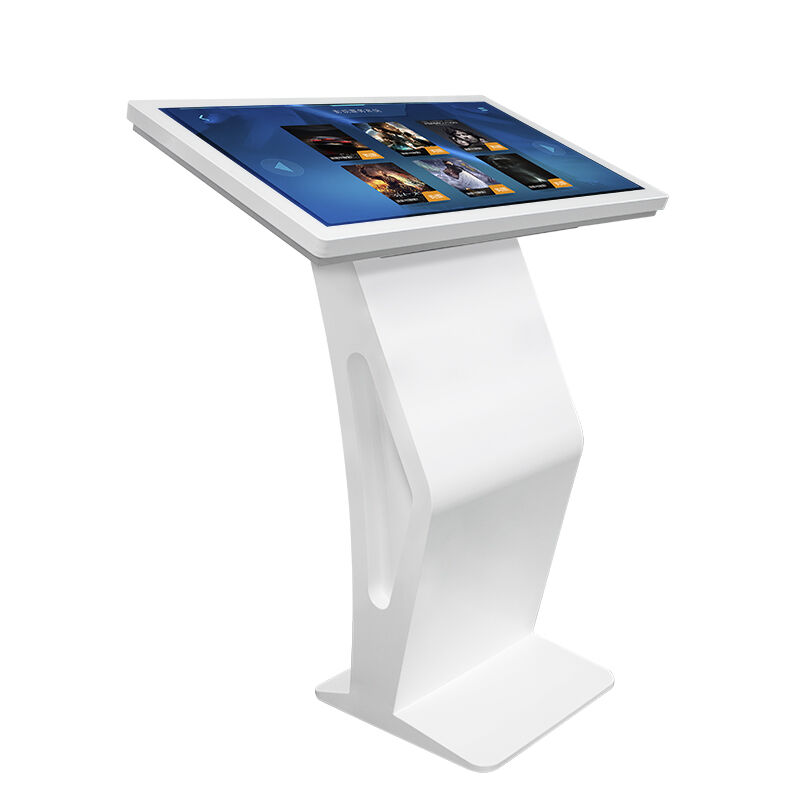
In today's fast-paced commercial environment, businesses across industries face mounting pressure to reduce wait times, optimize labor allocation, and maintain profitability while delivering superior customer experiences. The adoption of a self service kiosk represents a strategic response to these challenges, fundamentally transforming how organizations manage transactions, streamline workflows, and allocate human resources. These interactive systems enable customers to complete purchases, place orders, retrieve information, and perform various tasks independently, reducing dependency on traditional staffed service points and creating measurable improvements in operational throughput.
Understanding how a self service kiosk improves operational efficiency requires examining the direct mechanisms through which these systems reduce bottlenecks, lower labor costs, minimize transaction errors, and enable businesses to reallocate staff to higher-value activities. Rather than simply replacing human workers, these technologies reconfigure service delivery models to enhance speed, accuracy, and scalability while simultaneously improving customer satisfaction through reduced friction and increased control over the purchasing journey. The efficiency gains extend beyond immediate transaction processing to encompass inventory management, data collection, and strategic resource planning across multiple operational dimensions.
Transaction Speed and Throughput Enhancement
Elimination of Service Queue Bottlenecks
A self service kiosk directly addresses one of the most significant operational inefficiencies in customer-facing environments: the formation of waiting queues at traditional staffed service counters. When customers can access multiple kiosk terminals simultaneously, the service capacity of a location increases proportionally without requiring additional labor hours. During peak demand periods, a single employee managing one register creates a linear bottleneck, whereas multiple self service kiosk units operating concurrently allow parallel processing of transactions, dramatically reducing overall wait times and increasing the number of customers served per hour.
The speed advantage becomes particularly pronounced in environments with predictable, high-volume transactions such as quick-service restaurants, retail checkouts, and ticketing operations. Research consistently demonstrates that self service kiosk transactions complete faster than traditional counter interactions when customers are familiar with the interface, primarily because the system eliminates conversational delays, clarification exchanges, and interpersonal variability in service speed. This acceleration translates directly into higher transaction volumes during constrained time windows, enabling businesses to capture revenue that would otherwise be lost to customers who abandon queues or choose faster competitors.
Consistent Processing Speed Across All Interactions
Unlike human employees whose transaction speed varies based on experience level, fatigue, distraction, or individual work pace, a self service kiosk maintains uniform processing speed throughout operational hours. This consistency eliminates performance variability as a source of operational inefficiency, ensuring that service delivery remains predictable and reliable regardless of time of day or staffing conditions. The standardized interface guides all users through identical workflows, creating measurable process times that can be optimized through interface design rather than training programs or performance management interventions.
The predictability of kiosk transaction times also enables more accurate forecasting and capacity planning. Managers can calculate with precision how many self service kiosk units are required to handle projected customer volumes during specific periods, allowing for data-driven decisions about equipment deployment rather than relying on estimates of employee productivity that fluctuate based on numerous uncontrollable variables. This operational predictability reduces both over-staffing waste and under-capacity service failures, optimizing resource allocation across shifting demand patterns.
Labor Cost Reduction and Workforce Optimization
Direct Labor Expense Mitigation
The deployment of a self service kiosk creates immediate opportunities to reduce direct labor costs by decreasing the number of staff members required to maintain desired service levels. In high-volume environments, a single kiosk can effectively replace or supplement multiple full-time equivalent positions over the course of a year, with the capital investment typically recovering within 12 to 24 months through accumulated wage savings. This economic efficiency becomes particularly compelling in markets facing rising minimum wages, mandatory benefit costs, and tightening labor availability where traditional staffing models become increasingly unsustainable.
Beyond baseline wage savings, organizations realize additional financial benefits through reduced expenditures on employee training, turnover replacement, scheduling management, and compliance administration. A self service kiosk requires minimal maintenance training rather than ongoing customer service education, and experiences no turnover, sick days, or shift coverage challenges that drive hidden labor costs in traditionally staffed operations. The cumulative effect of these secondary savings often equals or exceeds the direct wage reductions, making the total labor efficiency impact substantially greater than simple headcount reduction calculations suggest.
Strategic Reallocation of Human Resources
Rather than simply eliminating positions, operationally sophisticated organizations use self service kiosk deployment to redeploy staff toward higher-value activities that machines cannot effectively perform. Employees previously occupied with repetitive transaction processing can be reassigned to customer consultation, complex problem resolution, quality assurance, merchandising, or proactive service roles that enhance the overall customer experience and drive revenue growth. This workforce optimization transforms labor from a transactional cost center into a strategic asset focused on relationship building and value creation.
The efficiency improvement occurs not only through cost reduction but also through enhanced employee satisfaction and reduced turnover in roles that become more engaging and less repetitive. Staff members freed from monotonous transaction processing often demonstrate higher job satisfaction, better performance in their repositioned roles, and longer tenure with the organization. This human resource optimization creates a virtuous cycle where technology handles routine tasks efficiently while human workers contribute specialized judgment, empathy, and problem-solving capabilities that differentiate the business from fully automated competitors.
Accuracy Enhancement and Error Reduction
Elimination of Order Entry Mistakes
A self service kiosk dramatically reduces transaction errors by removing the potential for miscommunication between customers and staff during order placement or information entry. When customers directly input their own selections, preferences, and specifications through a structured interface, the system captures exactly what the customer intends without the interpretation layer that introduces mistakes in traditional verbal communication. This direct input mechanism eliminates common error sources such as mishearing requests, incorrect item selection by staff members unfamiliar with inventory, and transcription mistakes during manual entry processes.
The accuracy improvement translates into measurable operational efficiency gains through reduced waste, fewer refunds, decreased remake requirements, and lower customer service intervention rates. In food service environments, order accuracy rates typically improve by 15 to 30 percent after self service kiosk implementation, directly reducing food cost waste and labor time spent correcting mistakes. Similar error reduction benefits appear across retail, healthcare, hospitality, and service industries where transaction accuracy directly impacts operational costs and customer satisfaction metrics that drive repeat business and positive reputation.
Standardized Data Capture and System Integration
Beyond individual transaction accuracy, a self service kiosk ensures consistent, structured data capture that feeds directly into backend systems without manual transcription or format conversion. This seamless integration eliminates the inefficiencies associated with paper-based processes, manual data entry, and the reconciliation efforts required when information passes through multiple handling stages. Real-time data flow from kiosk transactions enables instant inventory updates, immediate reporting, and automated reordering triggers that optimize supply chain efficiency and reduce stock-out losses.
The standardized data structure generated by self service kiosk systems also enhances analytical capabilities, allowing organizations to identify sales patterns, peak demand periods, popular product combinations, and customer preference trends with precision impossible in manual transaction environments. These insights drive strategic decisions about menu engineering, inventory allocation, staffing schedules, and promotional timing that compound operational efficiency gains beyond the immediate transaction processing improvements. The data quality advantage transforms the kiosk from a simple transaction device into a strategic intelligence gathering tool.
Scalability and Capacity Flexibility
Rapid Capacity Expansion Without Proportional Cost Increase
A self service kiosk provides exceptional scalability advantages because adding transaction capacity requires capital investment in additional units rather than the recurring costs and management complexity of hiring, training, and scheduling additional staff members. When a location experiences growth or seasonal demand spikes, deploying supplementary kiosks offers immediate capacity expansion that can be reversed during slower periods without severance costs or morale damage associated with workforce reductions. This flexible capacity model aligns operational resources more precisely with actual demand patterns.
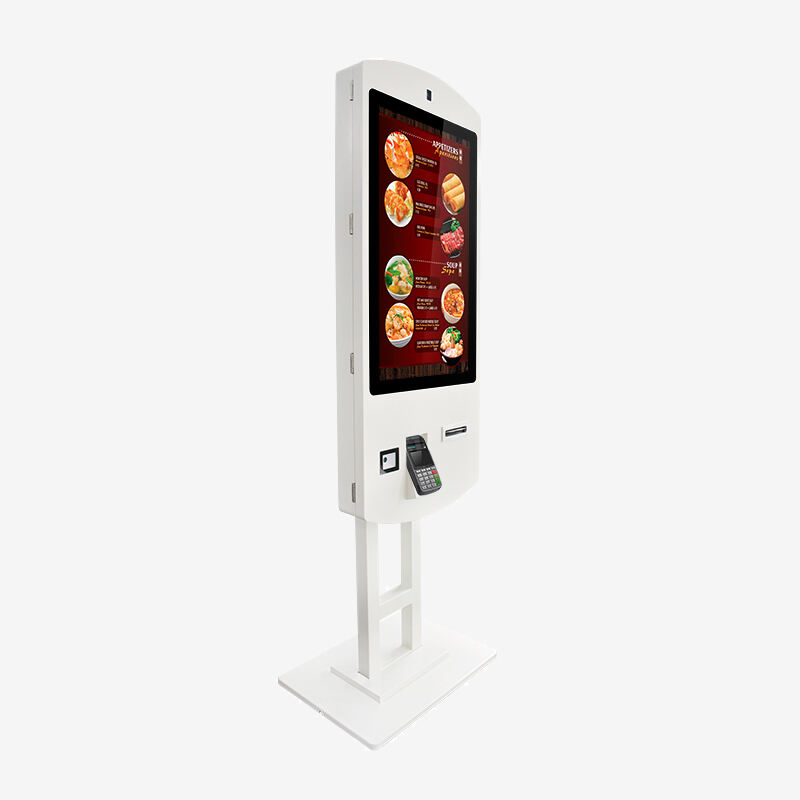
The scalability efficiency becomes particularly valuable for businesses operating multiple locations or planning expansion into new markets. Once the initial self service kiosk system is developed and tested, replicating the solution across additional sites requires only hardware deployment and minimal configuration rather than the extensive recruitment and training programs necessary for traditional staffing expansion. This replication efficiency accelerates growth timelines, reduces market entry costs, and ensures consistent customer experience across all locations regardless of local labor market conditions or workforce quality variations.
Extended Operating Hours Without Proportional Labor Investment
Organizations seeking to extend service availability into early morning, late evening, or overnight periods face significant labor cost barriers in traditional staffing models due to shift differentials, minimum staffing requirements, and the challenge of attracting workers for inconvenient hours. A self service kiosk enables extended or even continuous operation with minimal incremental cost, requiring only security presence rather than full service staff. This extended availability captures transaction opportunities during previously unserved time periods without the prohibitive labor expenses that made such extended hours economically unfeasible.
The efficiency gain from extended availability extends beyond direct revenue capture to encompass strategic competitive advantages in markets where convenience and accessibility differentiate service providers. Businesses offering self service kiosk access during expanded hours attract customer segments with non-traditional schedules, reduce daytime congestion by distributing demand across broader time windows, and establish market positioning as innovative, customer-centric organizations. These strategic benefits compound the direct operational efficiency improvements, creating comprehensive competitive advantages that justify kiosk investment beyond simple labor cost calculations.
Customer Flow Management and Space Utilization
Optimized Physical Layout and Traffic Patterns
The compact footprint and flexible placement options of a self service kiosk enable more efficient use of physical space compared to traditional service counter configurations that require dedicated staff positions, cash registers, and customer queuing areas. Multiple kiosks can be distributed throughout a facility to reduce congestion at single service points, guide customer flow more effectively, and utilize spaces that cannot accommodate full service counters. This spatial efficiency reduces rental costs per transaction, increases the effective capacity of existing facilities, and improves the customer experience by eliminating crowding and confusion.
Strategic self service kiosk placement also enables businesses to separate different transaction types, creating express lanes for simple purchases while preserving staffed positions for complex transactions requiring personal assistance. This service segmentation reduces interference between customer groups with different needs, accelerates overall throughput, and ensures that staff attention focuses on interactions where human judgment and expertise create the most value. The resulting operational flow improvements manifest as higher revenue per square foot, reduced customer frustration, and better utilization of both technology and human resources.
Peak Demand Absorption and Queue Discipline
During high-traffic periods, a self service kiosk installation provides surge capacity that prevents queue abandonment and lost sales without requiring permanent overstaffing that creates inefficiency during normal demand periods. The ability to activate additional kiosk stations during peak hours, then consolidate to fewer units during slower periods, creates dynamic capacity management impossible with fixed staffing models. This flexibility ensures that operational resources match actual demand patterns hour by hour rather than being sized for peak capacity and underutilized during off-peak periods.
The psychological impact of visible available kiosks also improves perceived wait times and customer patience even when actual queue lengths remain similar. Customers demonstrate greater tolerance for brief waits when they observe multiple service options and perceive forward progress, reducing abandonment rates and negative experiences that damage reputation. This perceptual efficiency gain complements the actual throughput improvements, creating compound benefits that enhance both operational metrics and customer satisfaction indicators that drive long-term business success.
FAQ
What types of businesses benefit most from self service kiosk efficiency improvements?
Businesses experiencing high transaction volumes with relatively standardized processes gain the most significant efficiency improvements from self service kiosk deployment. Quick-service restaurants, retail stores, entertainment venues, transportation hubs, healthcare facilities, and hospitality operations all realize substantial operational benefits because their transaction patterns involve predictable workflows that technology can effectively automate. Organizations facing labor shortages, operating in high-wage markets, or serving customers who value speed and convenience particularly benefit from the labor cost reductions and throughput enhancements that kiosks provide. The efficiency gains prove most dramatic in environments where peak demand periods create bottlenecks that existing staffing models cannot economically address.
How long does it typically take to realize measurable efficiency improvements after installing self service kiosks?
Most organizations observe immediate throughput improvements and queue reduction within the first week of self service kiosk deployment, though maximizing efficiency gains requires a transition period of approximately 30 to 90 days as customers become familiar with the technology and staff adjust to new workflows. Labor cost savings materialize gradually as organizations optimize staffing schedules based on actual transaction distribution between kiosks and traditional service points. The most sophisticated efficiency improvements, including data-driven menu engineering, inventory optimization, and strategic workforce redeployment, typically emerge over six to twelve months as accumulated transaction data enables analytical insights and operational refinements. Return on investment calculations generally show positive cash flow within 12 to 24 months depending on labor costs, transaction volumes, and implementation scope.
Do self service kiosks actually reduce overall labor needs or just shift employee responsibilities?
The labor impact of self service kiosk implementation varies based on organizational strategy, with most businesses experiencing a combination of absolute headcount reduction and responsibility reallocation. Operationally mature organizations typically reduce total labor hours by 20 to 40 percent for transaction processing functions while simultaneously redeploying remaining staff to customer service, quality assurance, and value-added roles that technology cannot effectively perform. This hybrid approach captures direct labor cost savings while enhancing overall service quality through better utilization of human capabilities. Smaller operations or those with minimal previous staffing may experience more modest absolute reductions but still realize significant efficiency gains through extended operating hours, reduced overtime requirements, and decreased dependence on temporary labor during peak periods.
How do self service kiosks maintain efficiency during technical problems or system failures?
Well-designed self service kiosk implementations include redundancy and fallback procedures to maintain operational efficiency during technical issues. Multiple kiosk units ensure that individual device failures do not eliminate self-service capacity entirely, while staff training in manual transaction processing provides backup capability when systems experience outages. Modern kiosk systems feature remote monitoring, automated error reporting, and predictive maintenance capabilities that identify potential failures before they impact operations, minimizing downtime through proactive intervention. Organizations typically maintain hybrid service models with both kiosk and traditional staffed options, ensuring that technical problems with one channel do not completely disrupt operations. The most operationally resilient implementations include service level agreements with technology providers guaranteeing rapid response times and maintain spare components on-site for immediate replacement when failures occur.
Table of Contents
- Transaction Speed and Throughput Enhancement
- Labor Cost Reduction and Workforce Optimization
- Accuracy Enhancement and Error Reduction
- Scalability and Capacity Flexibility
- Customer Flow Management and Space Utilization
-
FAQ
- What types of businesses benefit most from self service kiosk efficiency improvements?
- How long does it typically take to realize measurable efficiency improvements after installing self service kiosks?
- Do self service kiosks actually reduce overall labor needs or just shift employee responsibilities?
- How do self service kiosks maintain efficiency during technical problems or system failures?