EN
EN

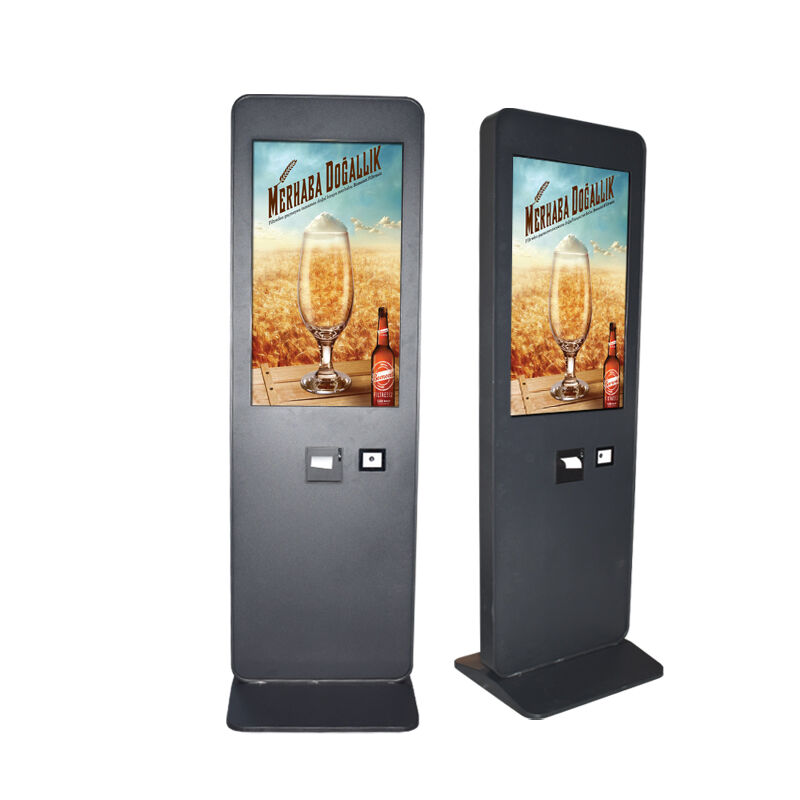
In today's fast-paced commercial environment, businesses across retail, food service, hospitality, and healthcare are under constant pressure to do more with less. Rising wages, staffing shortages, and increasingly impatient customers have pushed operators to rethink how they deliver service. self service kiosks have emerged as one of the most practical and measurable solutions to both of these challenges simultaneously. Rather than simply replacing a cashier, these systems fundamentally change the economics and flow of customer-facing operations.
Understanding exactly how self service kiosks reduce labor costs and wait times requires looking beyond the surface-level observation that machines can work faster than people. The real story involves workflow redesign, transaction efficiency, order accuracy, and the strategic redeployment of human staff. This article breaks down the mechanisms behind these gains and explains why businesses that implement self service kiosks consistently report improvements in both their bottom line and their customer satisfaction scores.
The Direct Link Between Self Service Kiosks and Labor Cost Reduction
Fewer Frontline Staff Required Per Transaction
The most immediate way self service kiosks reduce labor costs is by handling transactions that would otherwise require a dedicated employee. A single kiosk can process orders, accept payments, and issue receipts without any human involvement. In a quick-service restaurant, for example, one employee previously managed one register lane. With self service kiosks deployed, that same employee can oversee multiple kiosk stations simultaneously, dramatically improving the output-per-labor-hour ratio.
This shift does not necessarily mean mass layoffs. Many operators redirect staff from order-taking roles to food preparation, quality control, or customer assistance functions. The result is a leaner front-of-house operation where labor is concentrated in areas that genuinely require human judgment and interaction. Self service kiosks absorb the repetitive, transactional workload so that human effort can be applied where it adds the most value.
Over a full operating week, the cumulative labor hours saved through self service kiosks translate directly into reduced payroll expenses. For businesses operating on thin margins, this efficiency gain can be the difference between profitability and loss, particularly during peak hours when staffing costs spike.
Reduced Dependency on Peak-Hour Staffing Surges
One of the most expensive staffing challenges in service industries is the peak-hour surge. Lunch rushes, evening crowds, and weekend traffic all demand temporary increases in frontline staff. Scheduling and paying for this surge capacity is costly, and overstaffing during slow periods wastes resources. Self service kiosks provide a scalable solution that does not require additional headcount to handle increased transaction volume.
Because self service kiosks operate at a consistent pace regardless of how busy the environment becomes, businesses can maintain a stable core team rather than cycling through part-time or temporary workers to cover demand spikes. This stability also reduces the hidden costs associated with high staff turnover, including recruitment, onboarding, and training expenses that accumulate rapidly in high-churn service environments.
The financial model becomes even more compelling when businesses factor in overtime costs. Self service kiosks do not earn overtime pay, do not require breaks, and do not call in sick. Their operational cost is predictable and fixed relative to the volume of transactions they process, making labor budgeting far more accurate and manageable.
How Self Service Kiosks Compress Wait Times
Parallel Processing Replaces Sequential Queuing
Traditional service counters create a linear bottleneck. Each customer must wait for the one ahead of them to complete their full interaction before the next transaction begins. Self service kiosks break this sequential model entirely by enabling multiple customers to place orders simultaneously. A bank of four kiosks can process four transactions at once, effectively multiplying throughput without adding staff.
This parallel processing capability is particularly impactful during high-traffic periods. When a lunch crowd arrives at a quick-service restaurant, self service kiosks allow the entire group to begin ordering immediately rather than forming a single line. The perceived and actual wait time drops sharply, and customers who might have left due to a long queue are retained. For businesses where lost customers during peak hours represent significant revenue, this improvement in throughput has a direct financial impact.
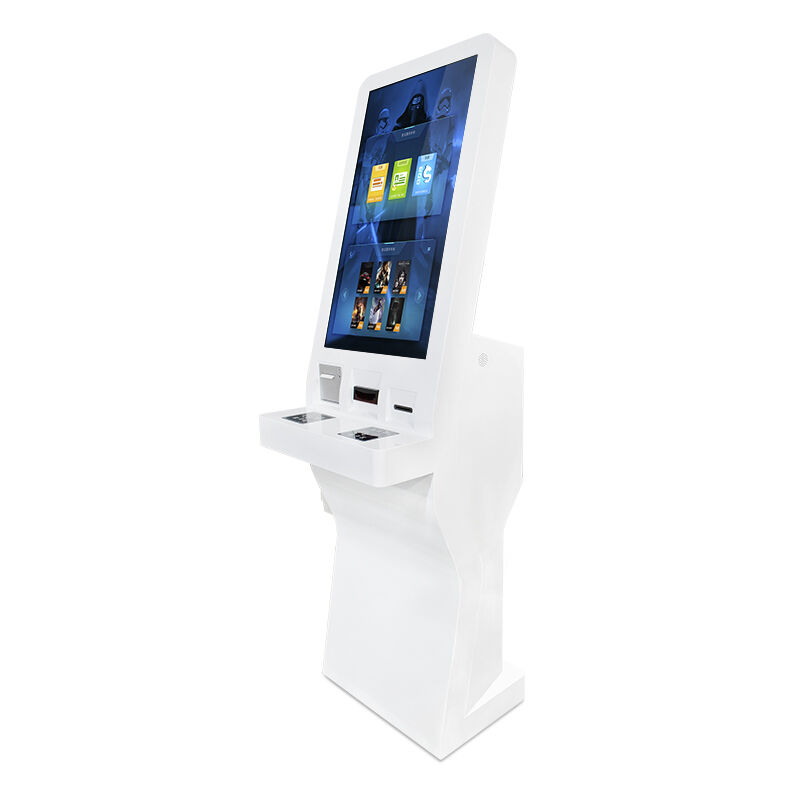
The speed advantage of self service kiosks is also reinforced by the elimination of communication delays. When a customer orders directly through a touchscreen interface, there is no risk of misheard items, repeated clarifications, or manual entry errors. The order is captured exactly as the customer intended, which accelerates the handoff to fulfillment and reduces the back-and-forth that slows down traditional counter service.
Faster Decision-Making Through Guided Interfaces
A well-designed self service kiosk interface guides customers through the ordering process in a structured, intuitive way. Visual menus with images, clear category navigation, and built-in upsell prompts help customers make decisions faster and more confidently than they might when facing a verbal menu or a crowded overhead board. This guided experience reduces the hesitation and indecision that often stalls transactions at staffed counters.
Self service kiosks also allow customers to review their full order before confirming, which reduces the frequency of post-order corrections. When a customer changes their mind at a staffed counter, the employee must void items, re-enter selections, and potentially reprint receipts. Each correction adds time to the transaction and to the queue behind it. The review-before-confirm model built into self service kiosks eliminates most of these interruptions.
For businesses with complex menus or customizable products, self service kiosks are especially effective at managing the decision process. Modifier options, dietary filters, and combo builders are presented clearly and systematically, allowing customers to configure their orders without requiring staff assistance. This self-guided customization is both faster and more accurate than verbal communication of complex preferences.
Operational Efficiency Gains Beyond the Transaction
Integrated Payment Processing Eliminates Handoff Delays
Modern self service kiosks integrate payment processing directly into the ordering workflow. Customers pay at the kiosk immediately after confirming their order, which eliminates the separate payment step that occurs at staffed counters. There is no waiting for a staff member to process the card, make change, or handle payment disputes. The entire transaction, from item selection to payment confirmation, is completed in a single uninterrupted flow.
This integration also reduces cash handling requirements, which carries its own labor and security implications. Businesses that shift a significant portion of transactions to self service kiosks often find that their cash management workload decreases substantially. Fewer cash transactions mean less time spent counting drawers, reconciling registers, and managing change float, all of which consume staff time that could be directed elsewhere.
The digital transaction records generated by self service kiosks also simplify end-of-day reconciliation and reporting. Automated data capture reduces the manual effort involved in tracking sales, identifying discrepancies, and preparing financial summaries. Over time, these administrative efficiencies compound into meaningful reductions in back-office labor costs.
Order Accuracy Reduces Waste and Rework
Errors in order-taking create downstream inefficiencies that inflate both labor costs and wait times. When a staff member mishears or miskeys an order, the kitchen prepares the wrong item, the customer waits longer, and staff must spend time correcting the mistake. Self service kiosks eliminate the human error component of order entry by capturing customer selections directly and transmitting them to the kitchen display system without interpretation.
Higher order accuracy means fewer remakes, less food waste, and shorter fulfillment times. The kitchen receives clean, complete orders and can execute them without interruption. This accuracy benefit is particularly significant in environments with complex customization options, where the probability of miscommunication between customer and staff is highest. Self service kiosks standardize the input process and ensure that what the customer selects is exactly what gets prepared.
From a labor cost perspective, reducing rework means that kitchen staff spend their time on productive output rather than corrective output. Every remade item represents wasted ingredients and wasted labor. By improving order accuracy at the point of capture, self service kiosks create efficiency gains that extend well beyond the front counter and into the entire fulfillment operation.
Strategic Workforce Redeployment Enabled by Self Service Kiosks
Shifting Staff to Higher-Value Customer Interactions
One of the less obvious but highly significant ways self service kiosks reduce labor costs is by enabling businesses to redeploy staff toward interactions that genuinely require human presence. When routine transactions are handled by self service kiosks, employees are freed to focus on complaint resolution, personalized assistance, quality assurance, and the kind of hospitality that builds customer loyalty. This redeployment improves service quality without increasing headcount.
In a restaurant context, this might mean having a dedicated team member circulate the dining area to assist customers using the kiosks, answer questions, and ensure satisfaction. In a retail environment, it might mean redirecting staff from checkout lanes to product knowledge and floor assistance roles. Self service kiosks make this kind of strategic staffing possible by absorbing the transactional workload that previously consumed the majority of frontline employee time.
The business case for this redeployment is strong. Customers who receive attentive, knowledgeable service during their visit are more likely to return and more likely to spend more per visit. Self service kiosks create the operational space for this elevated service model without requiring additional investment in headcount.
Consistent Performance Regardless of Staffing Conditions
Human staff performance varies with fatigue, motivation, training level, and experience. A new employee processes transactions more slowly than a veteran. A tired employee at the end of a long shift makes more errors than one who is fresh. Self service kiosks deliver consistent performance regardless of time of day, day of week, or operational conditions. This consistency is itself a form of efficiency that reduces the variability in wait times and service quality that customers experience.
For multi-location businesses, this consistency is especially valuable. Self service kiosks ensure that the ordering experience at one location matches the experience at another, regardless of local staffing quality or turnover rates. Brand standards are maintained through the interface design rather than through the unpredictable variable of individual employee performance.
This reliability also simplifies management. When self service kiosks handle a defined portion of the transaction volume, managers can plan staffing levels with greater confidence, knowing that kiosk throughput will remain stable. The unpredictability that makes service operations difficult to manage is reduced, and the overall operation becomes easier to optimize.
FAQ
Do self service kiosks completely replace human staff?
No, self service kiosks do not replace human staff entirely. They handle the transactional and order-entry portions of service, which allows businesses to operate with fewer frontline staff while redeploying existing employees to higher-value roles such as customer assistance, quality control, and fulfillment. The goal is a more efficient staffing model, not a fully automated one.
How quickly do businesses typically see a return on investment from self service kiosks?
The return on investment timeline for self service kiosks varies depending on transaction volume, labor costs in the local market, and the specific operational context. Many businesses in high-volume environments such as quick-service restaurants report recovering their investment within twelve to twenty-four months through labor savings, increased throughput, and higher average order values driven by kiosk upsell features.
Are self service kiosks suitable for all types of businesses?
Self service kiosks are most effective in environments with high transaction volumes, standardized product or service offerings, and customers who are comfortable with digital interfaces. Quick-service restaurants, retail checkout, ticketing, and healthcare check-in are among the most common and successful applications. Businesses with highly complex or consultative sales processes may find that self service kiosks complement rather than replace the primary service interaction.
How do self service kiosks affect customer satisfaction?
When implemented well, self service kiosks tend to improve customer satisfaction by reducing wait times, increasing order accuracy, and giving customers greater control over their experience. Customers who prefer speed and autonomy respond particularly well to self service kiosks. Businesses that also maintain attentive human staff for assistance and exception handling typically see the strongest satisfaction outcomes across all customer segments.