EN
EN


In an era defined by speed, convenience, and operational efficiency, Self service kiosks have moved from novelty to necessity across virtually every sector of the modern economy. From retail floors and hospital lobbies to airport terminals and quick-service restaurants, these interactive terminals are reshaping how businesses deliver services and how customers choose to receive them. The shift is not merely technological — it reflects a fundamental change in consumer expectations and the competitive pressures businesses face every day.
Understanding why self service kiosks have become essential requires looking beyond the hardware itself. It means examining the business drivers, the customer behavior trends, and the operational realities that make these systems not just useful but strategically critical. Whether a business is evaluating its first deployment or scaling an existing network of terminals, the case for self service kiosks has never been stronger or more clearly supported by real-world outcomes.
The Business Case: Why Self Service Kiosks Drive Measurable Value
Reducing Operational Costs Without Sacrificing Service Quality
One of the most compelling reasons businesses invest in self service kiosks is the direct impact on labor costs and operational efficiency. When customers can check in, place orders, pay bills, or retrieve information independently, the demand on frontline staff decreases significantly. This does not mean replacing people — it means reallocating human talent toward higher-value interactions that genuinely require empathy, judgment, and expertise.
In high-traffic environments such as fast food chains, government service centers, and retail stores, self service kiosks absorb a substantial portion of routine transactions. The result is shorter queues, faster throughput, and a measurable reduction in the cost per transaction. Businesses that have deployed these systems consistently report improved staff productivity because employees are freed from repetitive tasks and can focus on complex customer needs.
The return on investment for self service kiosks is also accelerated by their ability to operate continuously. Unlike staffed counters that require shift management, breaks, and overtime considerations, a well-maintained kiosk delivers consistent service around the clock. For businesses with extended operating hours or 24/7 service requirements, this availability is not just convenient — it is a structural advantage.
Increasing Revenue Through Upselling and Personalization
Self service kiosks are not passive transaction terminals. When configured with intelligent software, they become active revenue-generating tools. In food service environments, for example, kiosks consistently outperform human cashiers in upselling because they present add-on options visually, consistently, and without hesitation. Customers who might feel awkward declining a verbal upsell from a cashier are more receptive to on-screen suggestions.
Beyond upselling, self service kiosks can be integrated with loyalty programs, customer profiles, and purchase history data to deliver personalized recommendations. This level of personalization was once reserved for e-commerce platforms, but modern kiosk software brings the same capability to physical locations. The ability to greet a returning customer by name, display their preferred options, and suggest relevant promotions creates a more engaging and commercially effective interaction.
Businesses that treat self service kiosks purely as cost-reduction tools often underestimate their revenue potential. The most successful deployments treat kiosks as a customer engagement channel — one that can be continuously optimized based on transaction data, conversion rates, and customer feedback collected directly through the interface.
Customer Experience: Why Self Service Kiosks Meet Modern Expectations
Empowering Customers With Control and Speed
Modern consumers, particularly those in younger demographics, have a strong preference for self-directed experiences. They are accustomed to managing their own transactions through smartphones and online platforms, and they bring those expectations into physical environments. Self service kiosks meet this expectation by giving customers direct control over their interactions — they can browse at their own pace, review options without pressure, and complete transactions without waiting for staff availability.
Speed is equally important. In environments where time is a constraint — a lunch break, a connecting flight, a busy hospital visit — self service kiosks eliminate the friction of waiting in line for a staff member to become available. The ability to walk up, complete a transaction in under two minutes, and move on is a genuine service improvement that customers notice and value. This speed advantage directly influences customer satisfaction scores and repeat visit rates.
There is also a privacy dimension that is often overlooked. Some customers prefer to enter sensitive information — dietary restrictions, medical details, financial data — into a screen rather than communicate it verbally to a staff member. Self service kiosks provide a discreet, judgment-free interface that many customers find more comfortable for certain types of transactions.
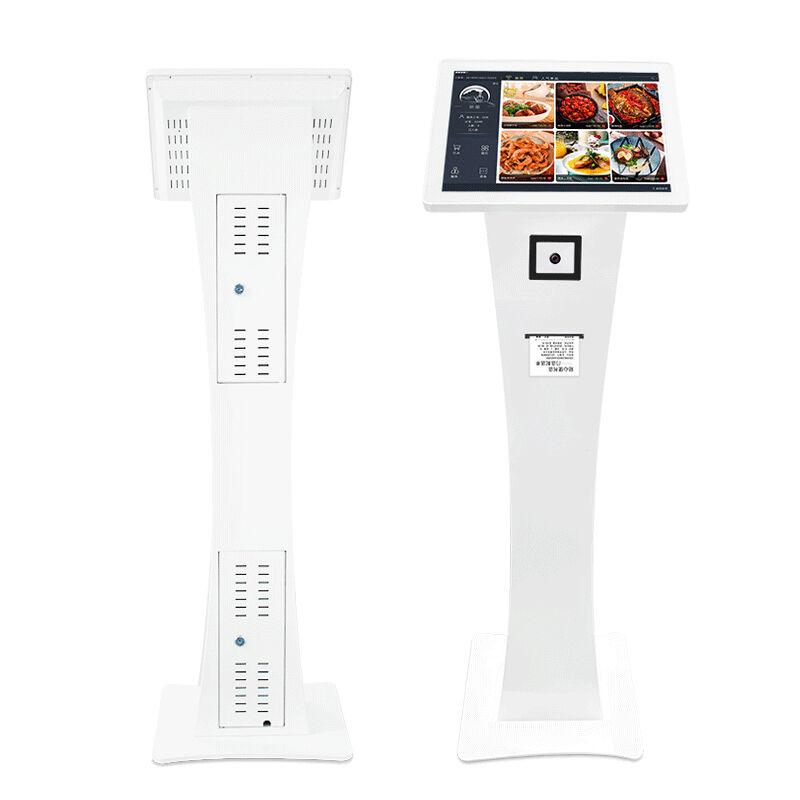
Accessibility and Multilingual Support
Self service kiosks can be configured to support multiple languages, making them an effective tool for businesses operating in diverse communities or international environments. A customer who is not fluent in the local language can navigate a kiosk interface in their preferred language, completing transactions accurately and independently. This capability removes a significant barrier that would otherwise require multilingual staff or translation assistance.
Accessibility features are another area where self service kiosks can be designed to serve a broader customer base. Adjustable screen heights, audio guidance, high-contrast display modes, and large-text options make these terminals usable for customers with visual impairments, mobility limitations, or other accessibility needs. When designed thoughtfully, self service kiosks do not just serve the average customer — they extend quality service to everyone.
For businesses with compliance obligations around accessibility standards, investing in properly designed self service kiosks is both a legal consideration and a brand statement. It signals that the business values inclusivity and has made a concrete investment in serving all customers equally.
Operational Resilience: Why Self Service Kiosks Strengthen Business Infrastructure
Handling Peak Demand Without Proportional Staffing Increases
Every business faces periods of peak demand — lunch rushes, holiday seasons, event-driven surges, or morning check-in windows. Managing these peaks with staff alone requires either overstaffing during normal periods or accepting degraded service during busy ones. Self service kiosks provide a scalable buffer that absorbs demand spikes without requiring proportional increases in headcount.
A network of self service kiosks can process multiple transactions simultaneously, effectively multiplying the service capacity of a location without expanding the physical footprint or the payroll. This scalability is particularly valuable for businesses in growth phases, where transaction volumes are increasing faster than the ability to hire and train staff. Kiosks scale with demand in a way that human staffing simply cannot match in terms of speed or cost.
The consistency of self service kiosks is also a resilience factor. Staff performance varies with fatigue, mood, and experience level. A kiosk delivers the same interface, the same options, and the same process every time, regardless of the time of day or the volume of transactions being processed. For businesses where consistency is a brand promise, this reliability is a meaningful operational advantage.
Data Collection and Business Intelligence
Self service kiosks are not just transaction points — they are data collection nodes. Every interaction generates structured data: what was ordered, when, how long the transaction took, which options were selected, and which were declined. This data, aggregated across hundreds or thousands of transactions, provides business intelligence that would be difficult or impossible to collect through staffed interactions.
Businesses can use this data to optimize menus, adjust pricing, identify bottlenecks in the transaction flow, and understand customer preferences at a granular level. Self service kiosks effectively turn every customer interaction into a data point that feeds continuous improvement. Over time, this creates a compounding advantage — the more transactions processed, the richer the dataset, and the more precisely the business can tune its offerings and operations.
Integration with back-end systems — inventory management, CRM platforms, analytics dashboards — extends the value of self service kiosks beyond the transaction itself. When kiosk data flows into broader business systems, it enables real-time decision-making, predictive restocking, and personalized marketing that would otherwise require significant manual effort to achieve.
Industry Applications: Where Self Service Kiosks Are Proving Essential
Retail, Hospitality, and Food Service
In retail environments, self service kiosks serve as product information terminals, self-checkout stations, and loyalty program interfaces. They reduce checkout queues, enable customers to locate products independently, and support returns or exchanges without requiring staff involvement at every step. For large-format retailers, kiosks distributed throughout the store create a network of service touchpoints that improve the overall shopping experience.
In hospitality, self service kiosks have transformed the check-in and check-out process. Hotels that deploy kiosks allow guests to bypass the front desk entirely, selecting their room, receiving their key card, and completing payment in minutes. This is particularly valued by business travelers who arrive late, are familiar with the property, and simply want to reach their room without delay. The kiosk becomes a premium service feature rather than a cost-cutting measure.
Food service has arguably seen the most dramatic adoption of self service kiosks, driven by the combination of high transaction volumes, strong upselling potential, and customer comfort with digital ordering. The ability to display full menu imagery, nutritional information, and customization options in a visually rich format gives kiosks a clear advantage over traditional counter ordering in terms of both customer experience and average order value.
Healthcare, Government, and Transportation
In healthcare settings, self service kiosks handle patient check-in, appointment confirmation, insurance verification, and wayfinding. These functions reduce administrative burden on reception staff and decrease patient wait times — both of which are critical in environments where time and accuracy directly affect outcomes. Patients who can check in independently arrive at their appointment point faster and with less anxiety about the administrative process.
Government service centers use self service kiosks to manage high volumes of routine inquiries, document submissions, and appointment scheduling. By directing citizens to kiosks for standard transactions, staff can focus on complex cases that require human judgment. This improves service delivery efficiency without requiring additional headcount, which is a persistent constraint in public sector environments.
Transportation hubs — airports, train stations, bus terminals — rely on self service kiosks for ticketing, boarding pass printing, baggage tagging, and wayfinding. The ability to process thousands of passengers independently, with minimal staff involvement, is essential to the operational model of modern transit infrastructure. In these environments, self service kiosks are not supplementary — they are load-bearing components of the service architecture.
FAQ
What types of businesses benefit most from self service kiosks?
Self service kiosks deliver the greatest value in environments with high transaction volumes, repetitive service interactions, and customers who are comfortable with digital interfaces. Retail, food service, hospitality, healthcare, transportation, and government services are among the sectors that have seen the most significant operational and customer experience improvements from kiosk deployment. However, any business that handles routine customer transactions can benefit from evaluating whether self service kiosks are a fit for their specific context.
How do self service kiosks affect customer satisfaction?
When implemented well, self service kiosks consistently improve customer satisfaction by reducing wait times, giving customers control over their interactions, and providing a consistent service experience. The key factors are interface design, transaction speed, and reliability. Poorly designed or frequently malfunctioning self service kiosks can have the opposite effect, so investment in quality hardware and software is essential to achieving positive customer outcomes.
Are self service kiosks difficult to maintain and manage?
Self service kiosks built on industrial-grade hardware are designed for continuous operation in demanding environments. Routine maintenance typically involves software updates, peripheral servicing (such as receipt printers or card readers), and periodic cleaning. Remote management capabilities allow operators to monitor kiosk status, push software updates, and diagnose issues without requiring on-site visits for every maintenance task. The total cost of maintenance is generally well within the operational savings generated by the kiosks themselves.
What should businesses consider when selecting self service kiosks?
Key selection criteria include the intended use case, the physical environment, the required peripherals (printer, scanner, card reader), the operating system and software compatibility, and the level of technical support available from the supplier. For high-traffic or outdoor deployments, industrial-grade self service kiosks with robust enclosures and reliable touch technology are essential. Businesses should also evaluate the kiosk's integration capabilities with existing POS, CRM, and back-end systems to ensure the deployment delivers its full potential value.