EN
EN


The digital transformation in educational and professional environments has reached a pivotal moment where traditional display technologies no longer meet the evolving demands of modern learning and collaboration. Interactive flat panels represent a revolutionary shift from outdated projectors and basic whiteboards, offering institutions unprecedented opportunities to enhance engagement, productivity, and communication effectiveness.
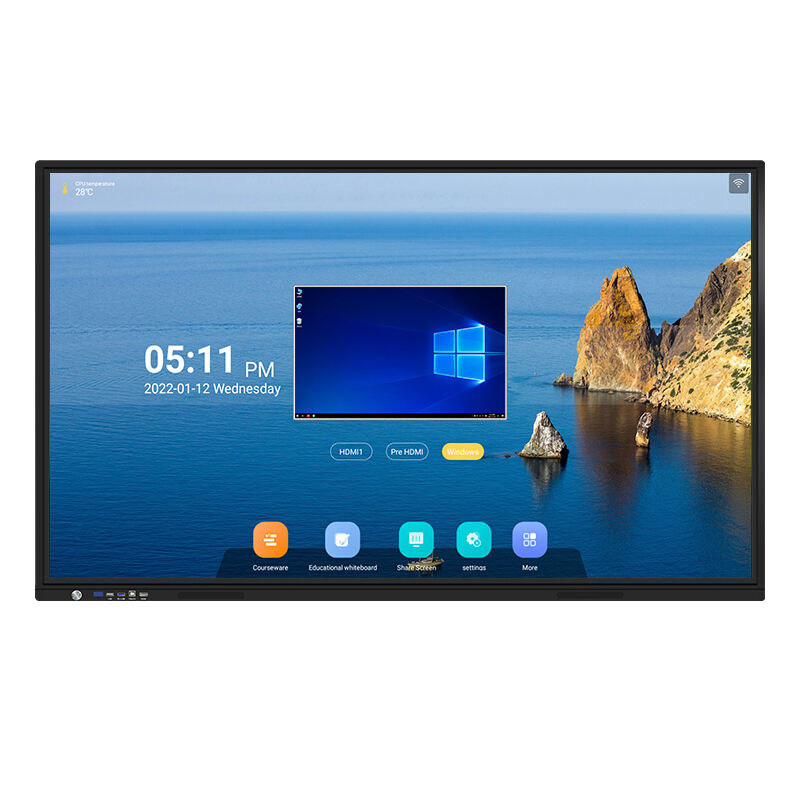
This widespread adoption of interactive flat panels stems from compelling operational advantages that directly address longstanding challenges in both educational and corporate settings. From reducing maintenance costs to enabling seamless multi-device connectivity, these advanced display systems deliver measurable improvements in user experience and institutional efficiency that justify the investment for forward-thinking organizations.
Enhanced Learning and Collaboration Capabilities
Multi-Touch Functionality Transforms Interaction
Interactive flat panels fundamentally change how users engage with digital content through advanced multi-touch capabilities that support simultaneous interaction from multiple users. Unlike traditional projection systems that require specific positioning and lighting conditions, these panels enable natural gesture-based interaction that feels intuitive to users of all ages and technical backgrounds.
The precision touch response of modern interactive flat panels allows for detailed annotation, drawing, and manipulation of digital content with remarkable accuracy. Teachers can seamlessly switch between writing mathematical equations, highlighting text passages, and manipulating 3D models, while office teams can collaboratively edit documents, brainstorm on digital whiteboards, and navigate complex presentations without interruption.
This enhanced interactivity creates more engaging learning environments where students actively participate rather than passively observe, leading to improved retention rates and deeper understanding of complex concepts. In corporate settings, the collaborative features of interactive flat panels facilitate more productive meetings where team members can contribute ideas in real-time and visualize solutions collectively.
Seamless Integration with Digital Workflows
Modern interactive flat panels integrate effortlessly with existing digital ecosystems, supporting wireless screen sharing, cloud-based content access, and cross-platform compatibility. This integration capability eliminates the technical barriers that previously hindered effective technology adoption in educational and professional environments.
The ability to connect laptops, tablets, and smartphones wirelessly to interactive flat panels streamlines content sharing and reduces setup time significantly. Teachers can instantly display student work from any device, while business professionals can share presentations, documents, and applications without complex cable configurations or technical troubleshooting.
Advanced interactive flat panels also support real-time collaboration with remote participants through integrated video conferencing capabilities and cloud-based sharing platforms. This functionality has become particularly valuable as hybrid learning and remote work models continue to evolve, ensuring consistent collaboration experiences regardless of physical location.
Superior Visual Quality and Reliability
4K Resolution and Enhanced Visibility
The visual superiority of interactive flat panels over traditional projection systems provides immediate and noticeable benefits in both educational and corporate environments. These displays deliver consistent brightness, color accuracy, and clarity that remain unaffected by ambient lighting conditions, ensuring optimal visibility throughout the day.
High-resolution 4K displays enable detailed visualization of complex diagrams, fine text, and multimedia content that would be illegible on lower-resolution projection systems. This enhanced clarity is particularly beneficial for technical training, detailed design reviews, and educational content that requires precise visual representation.
The consistent performance of interactive flat panels eliminates the common disruptions associated with projector maintenance, lamp replacement, and image quality degradation over time. Users can rely on consistent visual quality that maintains professional standards and supports effective communication without technical distractions.
Reduced Maintenance and Operational Costs
Interactive flat panels significantly reduce ongoing operational expenses compared to traditional projection systems through elimination of consumable components like projector lamps and filters. The solid-state LED backlighting technology used in these panels typically provides 50,000+ hours of operation without performance degradation or component replacement requirements.
The durability and reliability of interactive flat panels minimize IT support requirements and reduce classroom or meeting room downtime due to technical issues. This operational stability translates to measurable cost savings through reduced maintenance contracts, fewer service calls, and elimination of consumable replacement schedules.
Energy efficiency represents another significant advantage of interactive flat panels, as these systems consume substantially less power than projection systems while delivering superior performance. The lower energy consumption contributes to reduced utility costs and supports institutional sustainability initiatives.
Future-Ready Technology Investment
Scalable Software and Feature Updates
Interactive flat panels represent a future-oriented technology investment that continues to deliver value through software updates and expanding feature sets. Unlike hardware-dependent projection systems, these displays can receive new capabilities and improvements through firmware updates without requiring physical component replacement.
The Android-based operating systems commonly found in interactive flat panels support a growing ecosystem of educational and productivity applications specifically designed for large-format touch displays. This software flexibility allows institutions to adapt their technology capabilities to evolving needs without requiring new hardware investments.
Cloud connectivity enables interactive flat panels to integrate with emerging technologies like artificial intelligence tools, advanced collaboration platforms, and specialized industry applications. This adaptability ensures that current investments remain relevant as technology standards continue to evolve.
Meeting Evolving Educational and Business Requirements
The increasing emphasis on collaborative learning and agile business practices requires display technology that supports dynamic interaction and flexible content sharing. Interactive flat panels align perfectly with these evolving requirements by enabling spontaneous collaboration, multi-source content integration, and seamless transitions between different activity types.
Educational institutions benefit from interactive flat panels' ability to support diverse learning styles through visual, tactile, and collaborative interaction modes. The technology accommodates everything from individual student presentations to large group collaborative projects, providing the flexibility needed for modern pedagogical approaches.
Corporate environments leverage interactive flat panels to support agile methodologies, design thinking workshops, and cross-functional collaboration that requires visual communication and real-time content manipulation. The technology enables more effective knowledge sharing and decision-making processes that drive business outcomes.
Addressing Space and Installation Challenges
Space-Efficient Design and Installation
Interactive flat panels solve common space constraints in classrooms and conference rooms through their slim profile and wall-mounted installation options. Unlike projection systems that require specific throw distances and ceiling-mounted equipment, these displays can be installed in virtually any room configuration without compromising functionality.
The elimination of projection shadows and positioning restrictions allows for more flexible room layouts and seating arrangements. Users can work directly at the display without blocking the image, enabling more natural interaction patterns and improved visibility for all participants.
Installation simplicity reduces deployment time and costs, as interactive flat panels require only wall mounting and power connection rather than complex ceiling installation, cable routing, and projection alignment procedures. This streamlined installation process minimizes disruption to ongoing operations during technology upgrades.
Improved User Experience and Accessibility
Interactive flat panels provide superior accessibility features that support diverse user needs and compliance with accessibility standards. The adjustable height mounting options, high contrast display capabilities, and touch-based interaction support users with varying physical abilities and visual requirements.
The intuitive operation of interactive flat panels reduces training requirements and technical support needs, as users can quickly adapt to touch-based interaction without extensive instruction. This ease of use increases technology adoption rates and ensures that advanced features are actually utilized rather than ignored due to complexity.
Enhanced audio capabilities integrated into interactive flat panels provide clear sound reproduction without additional speaker systems, creating a more immersive and engaging experience for both educational and business applications. The integrated audio eliminates cable clutter and simplifies room setup while ensuring consistent audio quality.
FAQ
How do interactive flat panels compare to traditional projectors in terms of total cost of ownership?
Interactive flat panels typically offer lower total cost of ownership despite higher initial purchase prices due to elimination of consumable components like projector lamps, reduced maintenance requirements, lower energy consumption, and extended operational lifespan. The absence of lamp replacement costs alone can save thousands of dollars over the display's lifetime, while reduced IT support needs and minimal maintenance requirements further reduce operational expenses.
What size interactive flat panel is most suitable for standard classrooms and meeting rooms?
For standard classrooms accommodating 20-30 students, 75-inch interactive flat panels provide optimal visibility and interaction space, while larger rooms or auditoriums benefit from 85-inch or larger displays. Conference rooms typically perform well with 65-75 inch panels depending on room size and seating arrangements. The key consideration is ensuring all participants can clearly see content from their seating positions while maintaining comfortable interaction reach for presenters.
Can interactive flat panels integrate with existing IT infrastructure and learning management systems?
Modern interactive flat panels are designed for seamless integration with existing IT networks, learning management systems, and productivity platforms. They support standard network protocols, wireless connectivity options, and popular software platforms including Google Workspace, Microsoft Office 365, and major learning management systems. Most panels also offer API access and administrative controls that allow IT departments to manage multiple devices centrally and enforce security policies.
What training is required for teachers and employees to effectively use interactive flat panels?
Interactive flat panels require minimal formal training due to their intuitive touch-based interface that mirrors familiar smartphone and tablet interactions. Most users adapt to basic functionality within minutes, while advanced features typically require 1-2 hours of focused training. Many manufacturers provide online resources, video tutorials, and hands-on workshops to help users maximize the technology's potential. The learning curve is significantly shorter than traditional presentation technology due to the natural interaction methods.
Table of Contents
- Enhanced Learning and Collaboration Capabilities
- Superior Visual Quality and Reliability
- Future-Ready Technology Investment
- Addressing Space and Installation Challenges
-
FAQ
- How do interactive flat panels compare to traditional projectors in terms of total cost of ownership?
- What size interactive flat panel is most suitable for standard classrooms and meeting rooms?
- Can interactive flat panels integrate with existing IT infrastructure and learning management systems?
- What training is required for teachers and employees to effectively use interactive flat panels?