EN
EN

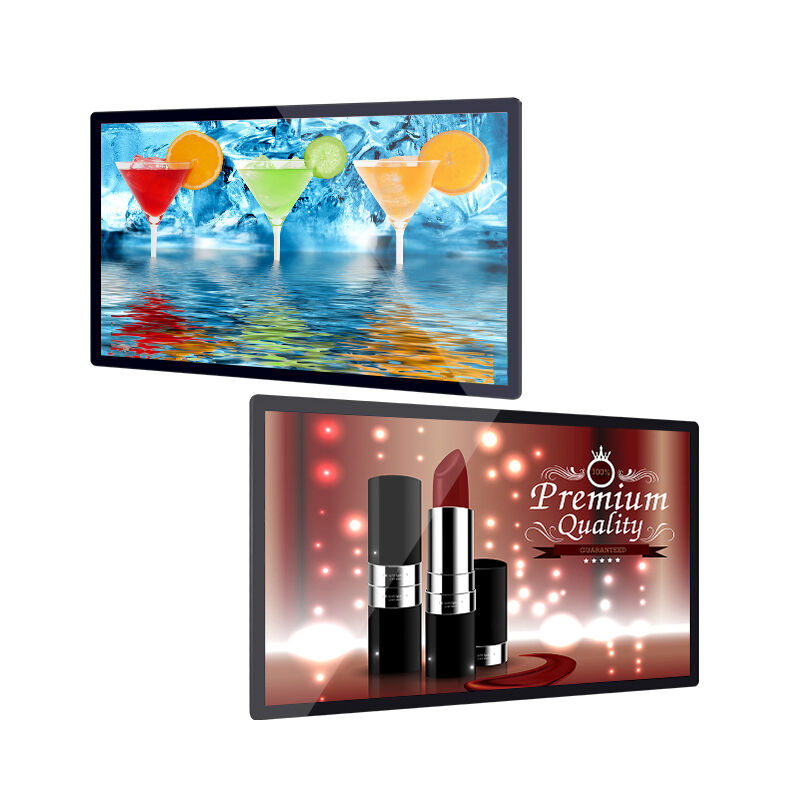
Modern commercial environments face constant pressure to maximize every square foot of available space while maintaining effective communication channels with customers and employees. Digital signage has become an essential tool for delivering dynamic content, but traditional floor-standing displays consume valuable real estate and create obstacles in high-traffic areas. Understanding how wall mount display solutions transform spatial efficiency while enhancing visual communication capabilities has become critical for businesses seeking to optimize their physical footprint without compromising message delivery effectiveness.
The fundamental advantage of wall mount display technology lies in its ability to eliminate floor space requirements entirely, redirecting visual attention to previously underutilized vertical surfaces. This approach not only preserves circulation paths and operational zones but also positions content at optimal viewing heights and angles for maximum audience engagement. For retail locations, corporate lobbies, healthcare facilities, and transportation hubs, the transition from floor-based to wall-mounted configurations represents a strategic reconsideration of how physical space supports communication objectives while maintaining accessibility and safety standards.
Spatial Efficiency Mechanisms of Wall Mount Display Systems
Vertical Space Utilization and Floor Area Liberation
Wall mount display installations fundamentally alter spatial dynamics by converting unused vertical surfaces into active communication zones. Traditional freestanding digital signage occupies between four to twelve square feet of floor area when accounting for the base footprint and required clearance zones. By contrast, wall-mounted configurations project only millimeters from the wall surface, effectively reclaiming this entire floor area for customer circulation, merchandise display, or operational functions. In retail environments where every square foot generates measurable revenue, this reclaimed space translates directly into additional product placement opportunities or improved customer flow patterns.
The vertical mounting approach also eliminates collision hazards associated with floor-standing units, particularly important in environments serving elderly populations, individuals with mobility challenges, or high-density foot traffic scenarios. Wall mount display systems positioned above pedestrian pathways create clear sightlines while preventing accidental contact that could damage equipment or injure patrons. This safety enhancement becomes especially valuable in narrow corridors, reception areas, and queue management zones where physical space constraints demand careful consideration of every installed element.
Mounting Height Optimization and Viewing Angle Control
Proper wall mount display placement enables precise control over viewing distances and angles, maximizing content visibility while minimizing wasted vertical space. Professional installations typically position screen centers between 48 and 60 inches from floor level for standing viewers, or 42 to 48 inches for seated viewing contexts. This adjustability allows facilities to optimize displays for specific audience demographics and viewing scenarios without consuming additional floor area. Tilt-adjustable mounting brackets further refine viewing angles, compensating for non-ideal wall positions or mixed viewing distance requirements within the same space.
The ability to mount displays at elevated positions also creates opportunities for secondary messaging zones above primary visual fields. In environments with high ceilings, wall mount display systems can occupy upper wall sections while leaving lower areas available for traditional signage, product displays, or architectural features. This layered approach to visual communication maximizes informational density per square foot of floor space while maintaining aesthetic balance and preventing visual clutter that could overwhelm visitors.
Integration with Architectural Elements and Existing Infrastructure
Modern wall mount display technology seamlessly integrates with existing architectural features, transforming structural elements into functional communication platforms. Column wraps, alcove installations, and recessed mounting configurations turn previously neutral surfaces into active engagement zones without altering floor plans or circulation patterns. This integration capability proves particularly valuable in historic buildings or spaces with fixed architectural constraints where floor-standing installations would compromise design integrity or violate preservation guidelines.
Cable management systems designed specifically for wall mount display installations further enhance spatial efficiency by concealing power and data connections within wall cavities or surface-mounted conduits. This approach eliminates the unsightly cable runs and floor-level junction boxes associated with freestanding displays, creating cleaner visual presentations while reducing tripping hazards. In-wall routing also protects cables from accidental damage and unauthorized tampering, extending system longevity while maintaining the professional appearance essential for customer-facing environments.
Operational Advantages Beyond Physical Space Savings
Enhanced Security and Theft Prevention
Wall mount display configurations inherently provide superior security compared to portable or floor-standing alternatives. Permanent wall attachment using security screws and tamper-resistant brackets makes unauthorized removal significantly more difficult and time-consuming, deterring opportunistic theft in public spaces. The elevated mounting position also places screens beyond casual reach, reducing vandalism risks and accidental damage from curious children or careless adults. For facilities operating extended hours or with limited security presence, this built-in theft resistance provides substantial long-term cost savings by reducing replacement frequency and insurance claims.
Secure wall mounting also prevents tipping hazards that plague freestanding displays, particularly in seismic zones or high-traffic areas subject to accidental impacts. Wall mount display systems properly anchored to structural members distribute weight loads across multiple attachment points, creating installations capable of withstanding significant lateral forces without risk of toppling. This stability proves critical in healthcare settings, schools, and public transportation facilities where patron safety regulations impose strict requirements on installed equipment that could potentially cause injury if dislodged.
Maintenance Accessibility and Long-Term Service Efficiency
Strategic wall mount display placement simplifies routine maintenance operations while preserving floor space accessibility for other activities. Articulating wall mounts enable technicians to pull displays away from walls for rear panel access without requiring complete removal or disruption of surrounding areas. This swing-out capability allows quick connector inspection, cable replacement, and component upgrades without dedicated maintenance windows or extensive patron displacement. Facilities management teams appreciate this accessibility advantage, as it reduces service call duration and minimizes operational interruptions.
The permanent mounting infrastructure also standardizes maintenance procedures across multiple locations, enabling service technicians to work more efficiently with predictable access patterns and consistent mounting hardware. This standardization reduces training requirements and decreases the likelihood of installation errors during service calls. For organizations managing distributed wall mount display networks across multiple facilities, this operational consistency translates into lower maintenance costs and improved system uptime through faster troubleshooting and repair completion.
Cleaning and Hygiene Protocol Simplification
Wall mount display installations significantly simplify cleaning protocols compared to floor-standing units with exposed bases, stands, and cable management systems. Custodial staff can clean around wall-mounted screens using standard wall cleaning procedures without navigating complex base structures or vulnerable cable connections at floor level. This streamlined approach reduces cleaning time per display while decreasing the risk of accidental damage from vacuum cleaners, mops, or floor scrubbing equipment that frequently impacts freestanding display bases.
In healthcare environments where infection control protocols demand frequent surface sanitization, wall mount display systems eliminate horizontal surfaces that accumulate dust and pathogens. The minimal projection from wall surfaces reduces particle accumulation compared to multi-component floor stands with numerous horizontal planes. This hygienic advantage becomes particularly important in clinical settings where display screens near patient care areas require regular disinfection to maintain sterile environments and prevent cross-contamination between patient encounters.
Design Flexibility and Aesthetic Integration Capabilities
Visual Presentation Enhancement Through Frameless Integration
Contemporary wall mount display technology enables near-seamless integration with architectural finishes, creating floating screen effects that enhance rather than disrupt interior design schemes. Ultra-thin bezels and flush-mount installation techniques minimize visual separation between display surfaces and surrounding walls, producing elegant installations that complement rather than dominate spatial aesthetics. This design-forward approach proves essential in hospitality venues, corporate headquarters, and luxury retail environments where technology must harmonize with premium finishes and carefully curated design languages.
The ability to coordinate wall mount display frames and mounting hardware with existing architectural finishes further enhances aesthetic integration. Custom paint-matched bezels, brushed metal trim options, and architectural-grade mounting systems allow displays to adopt the visual character of their surroundings rather than appearing as obvious technological insertions. This customization capability enables designers to maintain cohesive visual narratives throughout spaces while incorporating advanced digital communication capabilities that would be impossible to achieve with traditional signage approaches.
Multi-Screen Configuration and Video Wall Possibilities
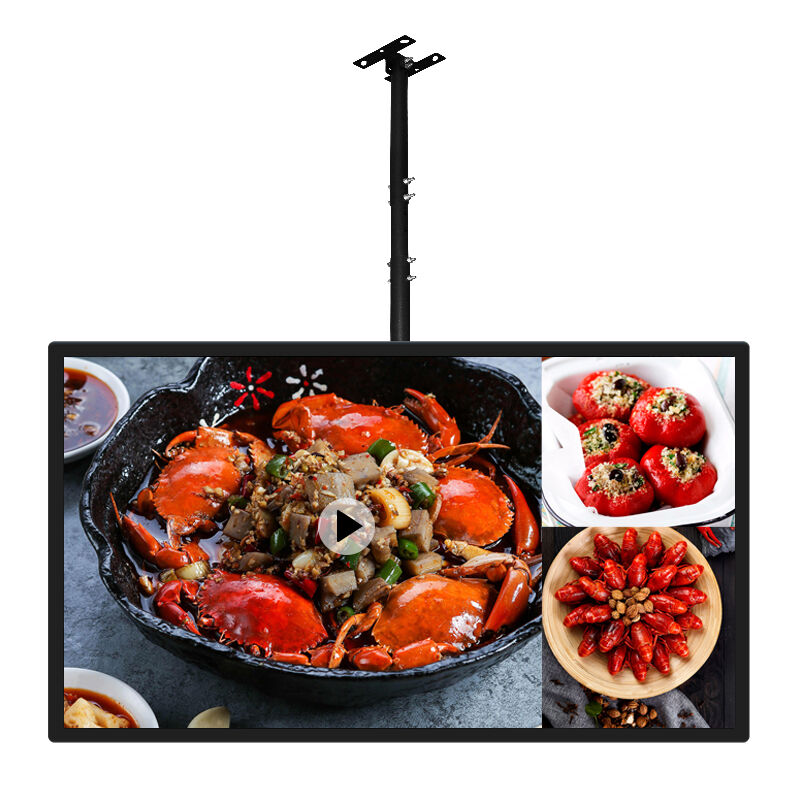
Wall mount display systems enable sophisticated multi-screen configurations that maximize information delivery capacity within constrained floor areas. Video wall installations combine multiple screens into unified visual canvases capable of displaying large-format content, multiple information streams, or coordinated visual effects that capture attention more effectively than single displays. The space efficiency of wall mounting becomes even more pronounced in multi-screen contexts, where equivalent floor-standing configurations would require substantial floor area and create significant circulation obstacles.
Precision mounting systems designed for video wall applications maintain exact screen alignment and minimal bezel gaps, creating nearly continuous visual surfaces from multiple individual panels. This technical capability transforms ordinary walls into immersive communication platforms suitable for command centers, experiential retail environments, and corporate presentation spaces. The vertical orientation of wall mount display arrays also accommodates portrait-mode installations ideal for menu boards, wayfinding directories, and social media content displays where vertical formats better match content aspect ratios and viewer expectations.
Adaptive Mounting Solutions for Diverse Surface Types
Modern wall mount display mounting systems accommodate diverse wall construction types through specialized hardware solutions that maintain security and stability across different substrate materials. Concrete and masonry installations utilize expansion anchors and through-bolt systems that achieve load ratings suitable for commercial-grade displays weighing up to 100 pounds or more. Drywall and partition wall applications employ specialized toggle bolts or backing plate systems that distribute loads across studs and structural members, enabling secure mounting even in non-load-bearing partition systems common in contemporary commercial construction.
This mounting versatility extends wall mount display deployment possibilities to virtually any interior surface, including glass partitions, metal panels, and composite architectural systems. Specialized mounting brackets accommodate irregular surfaces, curved walls, and angled installations that would be impossible with rigid floor-standing displays. The adaptability of wall mounting hardware ensures that spatial efficiency benefits remain accessible regardless of existing construction methods or architectural constraints, democratizing advanced digital signage capabilities across facility types and building ages.
Strategic Implementation Considerations for Maximum Space Efficiency
Load-Bearing Capacity Assessment and Structural Planning
Successful wall mount display implementation begins with thorough structural evaluation to verify that proposed mounting surfaces can safely support anticipated loads throughout the display lifecycle. Commercial displays with diagonal measurements exceeding 40 inches typically weigh between 30 and 70 pounds, requiring wall attachments capable of supporting three to five times the static weight to account for dynamic loads, seismic forces, and long-term mounting hardware degradation. Professional installers employ stud-finding technology, load calculation protocols, and structural reinforcement techniques to ensure mounting integrity regardless of wall construction methods.
In retrofit installations where existing walls may not provide adequate load-bearing capacity, supplemental reinforcement strategies enable wall mount display deployment without extensive structural modifications. Backing plates, load-distributing channels, and through-wall mounting systems transfer display weight to structural members beyond immediate mounting surfaces, expanding installation possibilities to partition walls and decorative surfaces never designed to support significant loads. These engineering solutions preserve the space-saving advantages of wall mounting while maintaining safety standards essential for public environments.
Power Infrastructure and Cable Routing Strategy
Comprehensive electrical planning ensures that wall mount display installations maintain clean aesthetics while meeting code requirements for power distribution and data connectivity. In-wall power routing requires compliance with local electrical codes governing concealed wiring methods, often necessitating licensed electrician involvement to install appropriate junction boxes and conduit systems. Strategic placement of electrical infrastructure during initial construction or renovation phases eliminates costly retrofit work and preserves the space-efficiency benefits of wall mounting by avoiding surface-mounted cable channels that project into circulation zones.
Emerging technologies such as power-over-Ethernet and wireless content delivery systems further enhance the spatial efficiency of wall mount display installations by reducing cable requirements and simplifying retrofit deployments. These approaches enable display installations in locations previously considered impractical due to electrical access limitations, expanding opportunities for strategic placement based purely on communication effectiveness rather than infrastructure convenience. The reduced cabling also simplifies future display upgrades and relocations, extending the useful life of mounting infrastructure across multiple technology generations.
Content Strategy Alignment with Spatial Context
Maximizing the space-efficiency advantages of wall mount display systems requires content strategies specifically optimized for wall-mounted viewing contexts and audience flow patterns. Unlike floor-standing displays that viewers might approach from multiple angles, wall-mounted screens typically receive frontal viewing from defined approach vectors, enabling content designers to optimize layouts, text sizes, and animation directions for these predictable viewing patterns. Understanding dwell times, viewing distances, and audience demographics specific to each mounting location ensures that content effectiveness matches the spatial efficiency achieved through wall mounting.
Vertical wall surfaces also enable creative content zoning strategies that segment information by mounting height and horizontal position. Upper screen zones might display ambient brand messaging visible from distance, while lower zones present detailed information accessible during close approach. This layered content strategy maximizes information delivery per unit of wall space while maintaining visual hierarchy that guides viewer attention through planned sequences. The strategic coordination between mounting position and content design amplifies the communication effectiveness achieved through space-efficient wall mount display deployment.
FAQ
What wall types are suitable for commercial wall mount display installations?
Commercial wall mount display systems can be installed on concrete, masonry, wood-framed drywall, steel stud partitions, and glass surfaces using appropriate mounting hardware. Solid concrete and masonry walls provide the most robust support through expansion anchors or concrete screws rated for the display weight plus safety margin. Wood-framed drywall installations require locating studs and using lag bolts extending into framing members. Steel stud partitions may need backing plates or toggle bolt systems to distribute loads. Professional assessment ensures the chosen wall construction can safely support the specific display model throughout its operational lifetime.
How much clearance space is required behind a wall mount display?
Most wall mount display installations require between one to four inches of clearance between the wall surface and the display's rear panel to accommodate mounting brackets, cable connections, and ventilation requirements. Low-profile fixed mounts minimize projection to approximately one inch, while articulating mounts that enable screen positioning adjustment require three to four inches in the closed position. Adequate rear clearance ensures proper airflow for display cooling systems and prevents heat buildup that could reduce component lifespan. Installation planning should verify that wall cavities provide sufficient depth for recessed mounting if flush installation is desired.
Can wall mount displays be relocated to different positions after initial installation?
Wall mount display systems can be relocated, though the process requires patching original mounting holes and verifying structural adequacy at new locations. The display itself typically detaches easily from wall-mounted brackets using quick-release mechanisms, but the mounting plate remains permanently attached unless removed. Relocation involves structural assessment of the new position, installation of fresh mounting hardware, and repair of previous mounting points to match surrounding wall finishes. Organizations anticipating frequent repositioning might consider modular mounting systems or increased initial mounting points to provide flexibility without repeated wall penetration.
What maintenance access do wall mount displays require compared to floor-standing units?
Wall mount display maintenance primarily involves screen cleaning, connection inspection, and occasional component replacement, all accessible without removing the display from its mount. Articulating wall brackets enable service technicians to swing displays away from walls for rear panel access to power connections, video inputs, and internal components. This serviceability advantage surpasses floor-standing displays that may require complete disassembly or relocation for rear access. Routine screen cleaning follows standard procedures using appropriate cleaning solutions and microfiber cloths. Professional installations include documentation of mount specifications and structural attachments to facilitate future service operations.
Table of Contents
- Spatial Efficiency Mechanisms of Wall Mount Display Systems
- Operational Advantages Beyond Physical Space Savings
- Design Flexibility and Aesthetic Integration Capabilities
- Strategic Implementation Considerations for Maximum Space Efficiency
-
FAQ
- What wall types are suitable for commercial wall mount display installations?
- How much clearance space is required behind a wall mount display?
- Can wall mount displays be relocated to different positions after initial installation?
- What maintenance access do wall mount displays require compared to floor-standing units?