 EN
EN

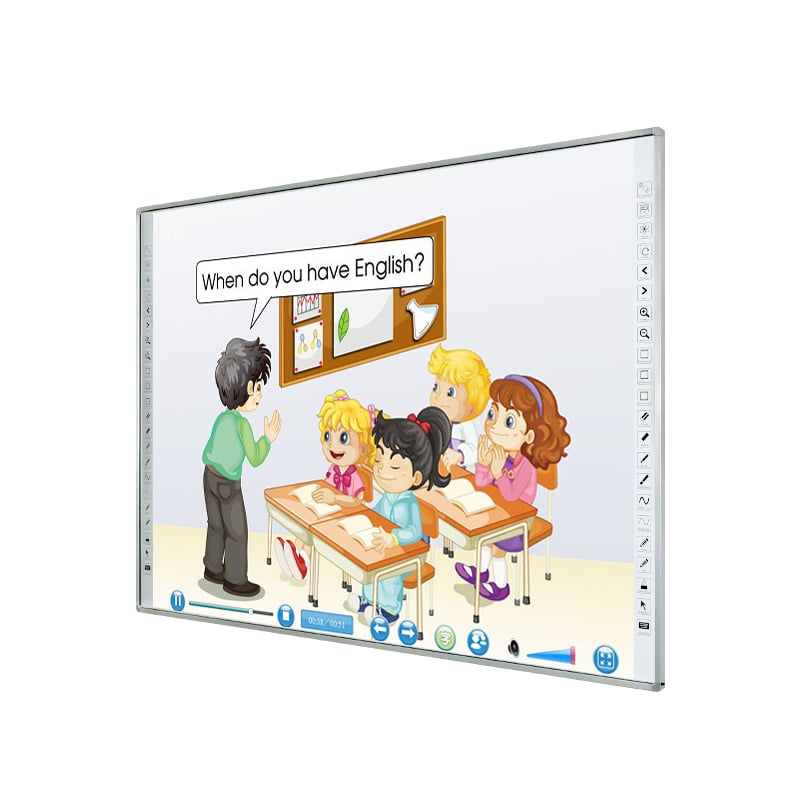
A smart whiteboard transforms how teams collaborate, teach, and present information in real time. Unlike traditional boards that rely solely on markers and erasers, a smart whiteboard integrates digital technology, cloud connectivity, and interactive features that make information sharing instantaneous and more engaging. Understanding what makes a smart whiteboard more effective than traditional boards helps educators, business leaders, and facilitators make informed decisions about upgrading their communication tools.
The efficiency gap between a smart whiteboard and traditional boards has widened significantly as digital workplaces and hybrid learning environments become standard. A smart whiteboard captures content digitally, enables simultaneous editing from multiple users, stores information automatically, and allows seamless sharing across devices. These capabilities address fundamental pain points that traditional boards cannot solve, making a smart whiteboard the preferred choice for organizations prioritizing productivity and engagement.
Real-Time Collaboration and Content Capture
Instant Digital Recording and Sharing
A smart whiteboard eliminates the manual work of transcribing handwritten notes. Every idea written on a smart whiteboard is automatically captured, timestamped, and can be saved in multiple formats for later reference. Traditional boards require someone to photograph content, type notes manually, or risk losing information entirely once the board is erased. A smart whiteboard solves this by creating a permanent digital record that participants can access immediately after the session ends, making knowledge retention significantly higher.
Multi-User Remote Participation
One of the most significant advantages of a smart whiteboard is enabling remote participants to see and interact with content in real time. Traditional boards are physical objects limited to people in the room; a smart whiteboard streams to multiple devices, allowing team members across offices, time zones, or continents to contribute equally. This capability transforms a smart whiteboard into a central hub for distributed collaboration, which traditional boards cannot provide. Organizations using a smart whiteboard report faster decision-making and more inclusive participation from remote staff.
Interactive Features and Engagement Enhancement
Multimedia Integration and Visual Learning
A smart whiteboard connects directly to the internet and applications, allowing instructors and presenters to embed videos, animations, web content, and interactive tools within a single session. Traditional boards support only static writing and drawing, limiting the depth of explanation and viewer engagement. A smart whiteboard transforms passive content consumption into active exploration, where users can click, drag, and interact with multimedia elements. Educational institutions using a smart whiteboard report higher student comprehension and retention compared to traditional classroom boards.
Built-In Annotation and Creative Tools
Beyond text and drawing, a smart whiteboard includes specialized tools for diagrams, flowcharts, mathematical notation, and 3D visualization that are either impossible or extremely time-consuming to create on traditional boards. A smart whiteboard offers templates, shapes, and intelligent formatting that reduce preparation time while improving clarity. These advanced tools make a smart whiteboard ideal for technical fields such as engineering, architecture, and data science, where precision and complexity demand digital support. Traditional boards simply cannot match the sophistication of a smart whiteboard's creative capabilities.
Integration with Business and Educational Ecosystems
Seamless Connectivity with Existing Software
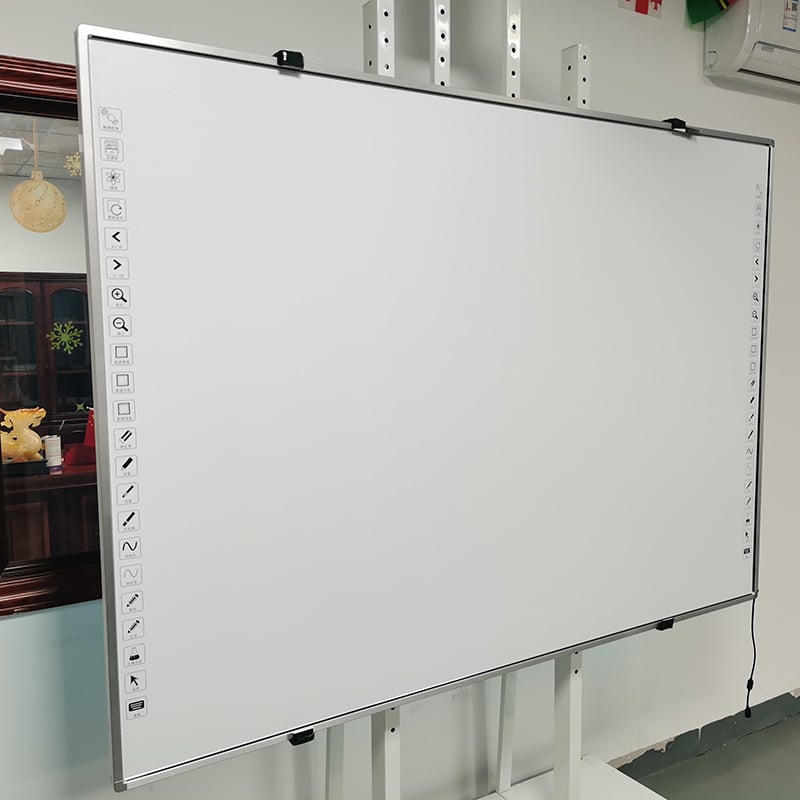
A smart whiteboard integrates with learning management systems, project management platforms, cloud storage, and enterprise software that organizations already use. Content created on a smart whiteboard can be automatically saved to shared drives, linked to project timelines, or embedded in presentations without manual export. Traditional boards operate in isolation, requiring separate documentation workflows that slow down operational efficiency. The integration capability of a smart whiteboard reduces friction in information flow, making it essential for modern digital workplaces.
Analytics and Performance Tracking
Advanced implementations of a smart whiteboard provide usage analytics, participant engagement metrics, and content performance tracking. Educational institutions and training organizations can measure how effectively a smart whiteboard is being used, identify which topics need reinforcement, and adjust instructional approaches based on real data. Traditional boards offer no insight into engagement or learning outcomes, making improvement efforts largely guesswork. A smart whiteboard transforms collaboration and instruction into data-informed processes that support continuous optimization.
Practical Advantages for Modern Workspaces
Reduced Time Spent on Administrative Tasks
Teams using traditional boards spend significant time photographing content, manually typing notes, sending emails with transcribed information, and organizing scattered documentation. A smart whiteboard eliminates these steps by automating capture, storage, and distribution. This efficiency gain translates to hours saved per week, allowing teams to focus on strategy and execution rather than documentation overhead. Organizations implementing a smart whiteboard report improved team morale because meetings become more productive and action items are tracked automatically.
Environmental and Space Efficiency
While seemingly minor, the environmental impact of a smart whiteboard versus traditional boards is meaningful at organizational scale. Traditional boards require markers, erasers, and occasional replacement due to permanent staining or surface degradation. A smart whiteboard eliminates consumable supplies and reduces waste. Additionally, a smart whiteboard can replace multiple traditional boards because its content can be archived and retrieved, maximizing space utilization in modern offices where real estate is expensive. The durability and versatility of a smart whiteboard make it a sustainable long-term investment compared to traditional boards that require ongoing maintenance.
FAQ
Does a smart whiteboard require extensive training to use?
Most modern smart whiteboard interfaces are designed for intuitive use, with touch controls and gesture recognition similar to tablets and smartphones. Users familiar with touchscreen devices adapt quickly to a smart whiteboard. However, mastering advanced features like multimedia integration, custom templates, and cloud synchronization may require brief training sessions. Many manufacturers provide tutorials and support resources, and a smart whiteboard's core functionality remains accessible even to first-time users.
What is the typical cost difference between a smart whiteboard and traditional boards?
A smart whiteboard represents a higher upfront investment than traditional boards, typically ranging from several hundred to several thousand dollars depending on size and features. However, when accounting for reduced marker and eraser costs, eliminated manual documentation labor, improved productivity, and the ability to replace multiple traditional boards with one smart whiteboard, the total cost of ownership becomes favorable over three to five years. Organizations that prioritize collaboration and data capture find the investment in a smart whiteboard justified by efficiency gains and engagement improvements.
Can a smart whiteboard work offline if internet connection fails?
Most smart whiteboard systems offer hybrid functionality, allowing local work to continue even without internet connectivity. Content created while offline typically syncs automatically once the connection is restored. This design ensures that a smart whiteboard remains operational during network outages, maintaining productivity continuity. Traditional boards obviously function without power or connectivity, but they lack the collaborative and digital advantages that make a smart whiteboard valuable in connected work environments.


