EN
EN

In modern industrial and commercial environments, the pressure to maintain speed, accuracy, and consistency has never been greater. Automated workflows are now the backbone of operations across manufacturing, logistics, retail, and service industries. Within these systems, checking machines play a foundational role that is often underestimated until something goes wrong. They are the silent gatekeepers that ensure every step of a process meets the required standard before the next step begins, preventing costly errors from cascading through an entire production or service chain.
Understanding why checking machines are important requires looking at what automated workflows actually demand. Automation is only as reliable as its weakest verification point. When human oversight is reduced or removed from a process, the responsibility for quality control, data validation, and compliance confirmation shifts entirely to the machines embedded in the workflow. checking machines fulfill this responsibility by providing real-time verification at critical touchpoints, making them indispensable to any serious automation strategy.
The Core Role of Checking Machines in Automated Systems
Verification as a Structural Requirement
Automated workflows are designed to eliminate manual intervention, but this design creates a fundamental challenge: without human eyes on the process, errors can propagate undetected. Checking machines address this by acting as embedded verification nodes within the workflow architecture. They do not simply observe — they actively confirm that inputs, outputs, and intermediate states conform to predefined parameters before allowing the process to continue.
This structural role means that checking machines are not optional add-ons. They are load-bearing components of the automated system. Removing or bypassing them does not simplify the workflow — it exposes the entire operation to uncontrolled risk. In high-throughput environments, even a small error rate multiplied across thousands of daily transactions can result in significant financial and reputational damage.
The value of checking machines is therefore not measured only by what they catch, but by what they prevent. A single verification failure that goes undetected can trigger a chain of downstream errors that are far more expensive to correct than the original fault. This is why their placement and reliability within the workflow are treated as engineering priorities rather than afterthoughts.
Real-Time Decision Making at the Point of Action
One of the defining characteristics of effective checking machines is their ability to make decisions in real time. In automated workflows, delays are costly. A verification system that requires batch processing or manual review defeats the purpose of automation. Modern checking machines are designed to process data, compare it against standards, and return a pass or fail signal within milliseconds, keeping the workflow moving without interruption.
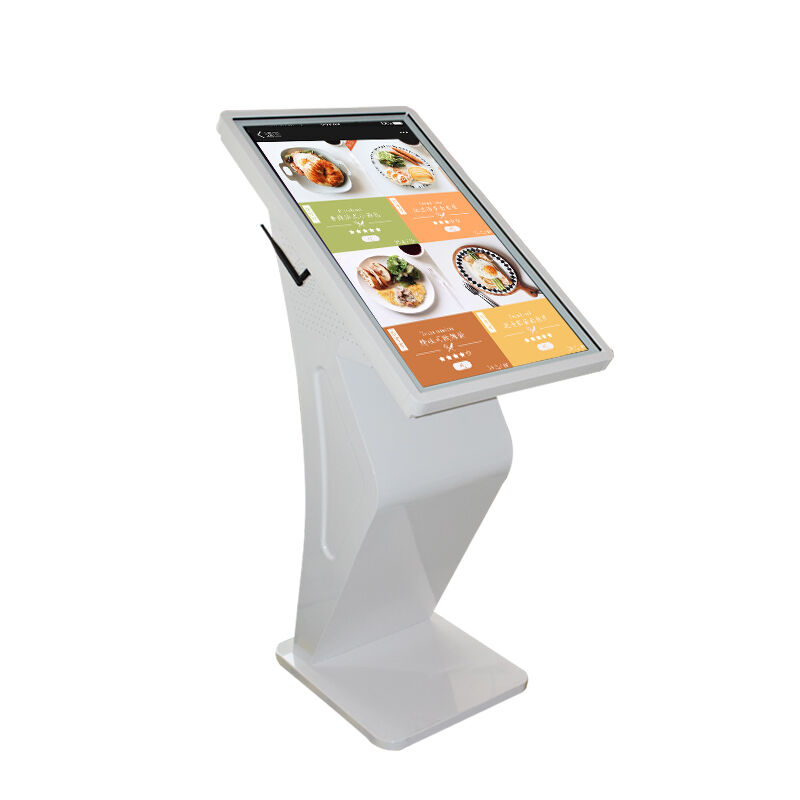
This real-time capability is especially critical in self-service and customer-facing environments. When a kiosk or automated terminal is used for identity verification, document scanning, or transaction processing, the checking machines embedded in the system must respond instantly. Any lag in verification creates friction for the user and reduces the operational efficiency that automation was meant to deliver.
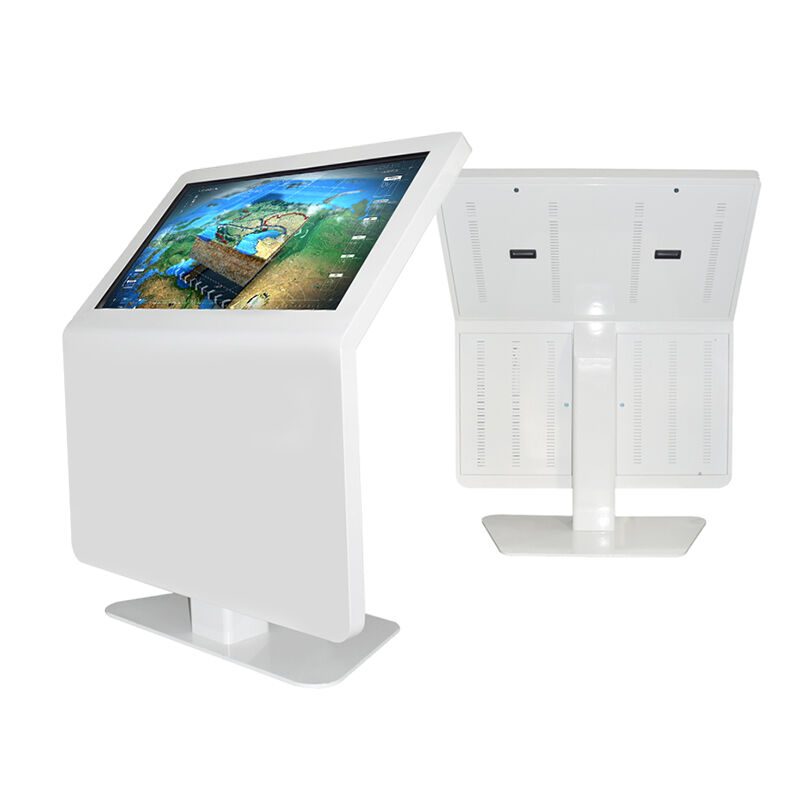
The integration of touch-enabled interfaces and intelligent scanning hardware in modern checking machines has made real-time decision making more accessible across a wider range of deployment scenarios. Industrial-grade terminals now combine processing power with peripheral support — including barcode readers, document scanners, and biometric sensors — to handle complex verification tasks without slowing the workflow.
Why Checking Machines Improve Workflow Accuracy and Consistency
Eliminating Human Error from Repetitive Verification Tasks
Human operators are effective at complex judgment tasks, but they are poorly suited to repetitive, high-volume verification work. Fatigue, distraction, and inconsistency are inherent limitations of manual checking processes. Checking machines do not experience these limitations. They apply the same criteria with the same precision on the first check of the day as on the ten-thousandth, making them far more reliable for tasks that require consistent standards across large volumes.
In manufacturing environments, this consistency translates directly into product quality. In logistics, it means accurate inventory counts and correct shipment verification. In service industries, it ensures that every customer interaction is processed according to the same rules, regardless of time of day or operator experience level. The reliability of checking machines is what makes scalable automation genuinely trustworthy.
Beyond accuracy, consistency also has compliance implications. Many industries operate under regulatory frameworks that require documented verification at specific process stages. Checking machines that generate audit logs and timestamped records provide the evidence trail that compliance audits demand, something that manual checking processes struggle to deliver at scale.
Standardizing Quality Across Distributed Operations
Organizations that operate across multiple sites, shifts, or service points face a particular challenge: maintaining uniform quality standards when human teams vary in training, experience, and attention. Checking machines solve this problem by encoding the standard into the machine itself. The verification criteria are set once and applied uniformly everywhere the machine is deployed.
This standardization is a significant operational advantage. It means that a product checked at one facility meets the same standard as one checked at another. A customer served at one kiosk terminal receives the same verification process as one served at a different location. The checking machines become the common standard-bearer across the entire operation, independent of local variables.
For businesses scaling their automated workflows, this standardization also simplifies training and onboarding. Staff do not need to learn complex manual checking procedures because the machines handle verification automatically. Human roles shift toward exception handling and system oversight, which are higher-value activities that benefit from human judgment rather than routine repetition.
The Impact of Checking Machines on Workflow Efficiency
Reducing Bottlenecks at Verification Stages
In any workflow, verification stages are potential bottlenecks. If checking takes longer than the upstream process that feeds it, work accumulates and throughput drops. Checking machines are engineered to match or exceed the speed of the processes they support, ensuring that verification does not become the limiting factor in overall workflow performance.
This speed advantage is particularly visible in high-volume environments such as retail checkout, airport processing, or industrial inspection lines. When checking machines are properly integrated, they process items faster than any manual alternative while maintaining higher accuracy. The result is a workflow that is both faster and more reliable — a combination that manual processes cannot achieve at scale.
The efficiency gains from well-deployed checking machines also have a compounding effect. Faster verification means shorter cycle times, which means higher throughput, which means greater capacity utilization. For businesses operating on thin margins or under tight service level agreements, these efficiency gains translate directly into competitive advantage.
Supporting Continuous Operation Without Supervision
Automated workflows are often designed to operate continuously, including during hours when human supervision is minimal or absent. Checking machines make this possible by providing reliable, unsupervised verification around the clock. They do not require breaks, shift changes, or management oversight to maintain their performance standards.
This capability is especially valuable in industries where continuous operation is a business requirement. Warehouses that run overnight fulfillment cycles, manufacturing plants that operate across multiple shifts, and self-service terminals that must be available at all hours all depend on checking machines that can sustain their verification function without human intervention.
The hardware reliability of modern checking machines supports this requirement. Industrial-grade components, fanless designs, and wide operating temperature ranges ensure that these systems continue to function in demanding environments where consumer-grade equipment would fail. The investment in robust hardware is justified by the operational continuity it enables.
Checking Machines in Self-Service and Customer-Facing Workflows
Enabling Trusted Automation in Public-Facing Environments
Self-service environments present a unique set of challenges for automated workflows. Unlike controlled industrial settings, public-facing deployments must handle unpredictable user behavior, varying document types, and diverse input quality. Checking machines in these environments must be robust enough to handle this variability while still delivering fast, accurate verification results.
Modern self-service kiosks equipped with integrated checking machines — including document scanners, barcode readers, and identity verification modules — are now deployed across a wide range of applications. Government service centers, healthcare registration points, financial service terminals, and retail self-checkout systems all rely on embedded verification to process transactions accurately without staff involvement.
The user experience implications are significant. When checking machines work reliably, customers complete their transactions quickly and confidently. When they fail or produce false rejections, frustration builds and trust in the automated system erodes. This is why the accuracy and responsiveness of checking machines in customer-facing deployments are treated as direct drivers of service quality and customer satisfaction.
Integrating Checking Functions with Workflow Management Systems
The value of checking machines is amplified when they are tightly integrated with the broader workflow management system. Standalone verification that does not communicate its results to the surrounding system creates data silos and limits the operational intelligence available to managers. Integrated checking machines feed their results into central systems in real time, enabling dynamic workflow adjustments based on verification outcomes.
This integration supports a range of operational improvements. Exception handling can be automated — items that fail verification can be automatically routed to a review queue without human intervention. Performance analytics can track verification rates, failure patterns, and throughput metrics over time, providing the data needed to optimize the workflow continuously.
For organizations managing complex, multi-step automated workflows, the ability to treat checking machines as intelligent, communicating nodes rather than isolated devices is a significant architectural advantage. It transforms verification from a passive checkpoint into an active contributor to workflow intelligence and operational improvement.
FAQ
What types of workflows benefit most from checking machines?
Workflows that involve high volumes of repetitive verification tasks benefit most from checking machines. This includes manufacturing quality control, logistics and inventory management, self-service customer transactions, document processing, and identity verification. Any process where accuracy, speed, and consistency are critical and where manual checking would create bottlenecks or introduce error risk is a strong candidate for checking machines integration.
How do checking machines contribute to compliance in regulated industries?
Checking machines contribute to compliance by applying consistent verification criteria at every process stage and generating auditable records of each check performed. In regulated industries such as healthcare, finance, and food production, this documentation is essential for demonstrating that required verification steps were completed correctly. The automated audit trail produced by checking machines is far more reliable and complete than records generated through manual checking processes.
Can checking machines be integrated into existing automated workflows?
Yes, modern checking machines are designed with integration in mind. They typically support standard communication protocols and can connect to existing workflow management systems, ERP platforms, and data management infrastructure. The key consideration is ensuring that the checking machines selected are compatible with the data formats and communication standards used by the surrounding system, and that their verification speed matches the throughput requirements of the workflow they are joining.
What should organizations consider when selecting checking machines for automated workflows?
Organizations should evaluate checking machines based on verification accuracy, processing speed, hardware durability, integration capability, and the specific types of inputs the machine needs to handle. For customer-facing deployments, ease of use and interface quality are also important factors. Industrial environments require hardware rated for the operating conditions present, including temperature ranges, dust exposure, and continuous operation requirements. Matching the machine's capabilities to the specific demands of the workflow is more important than selecting the most feature-rich option available.